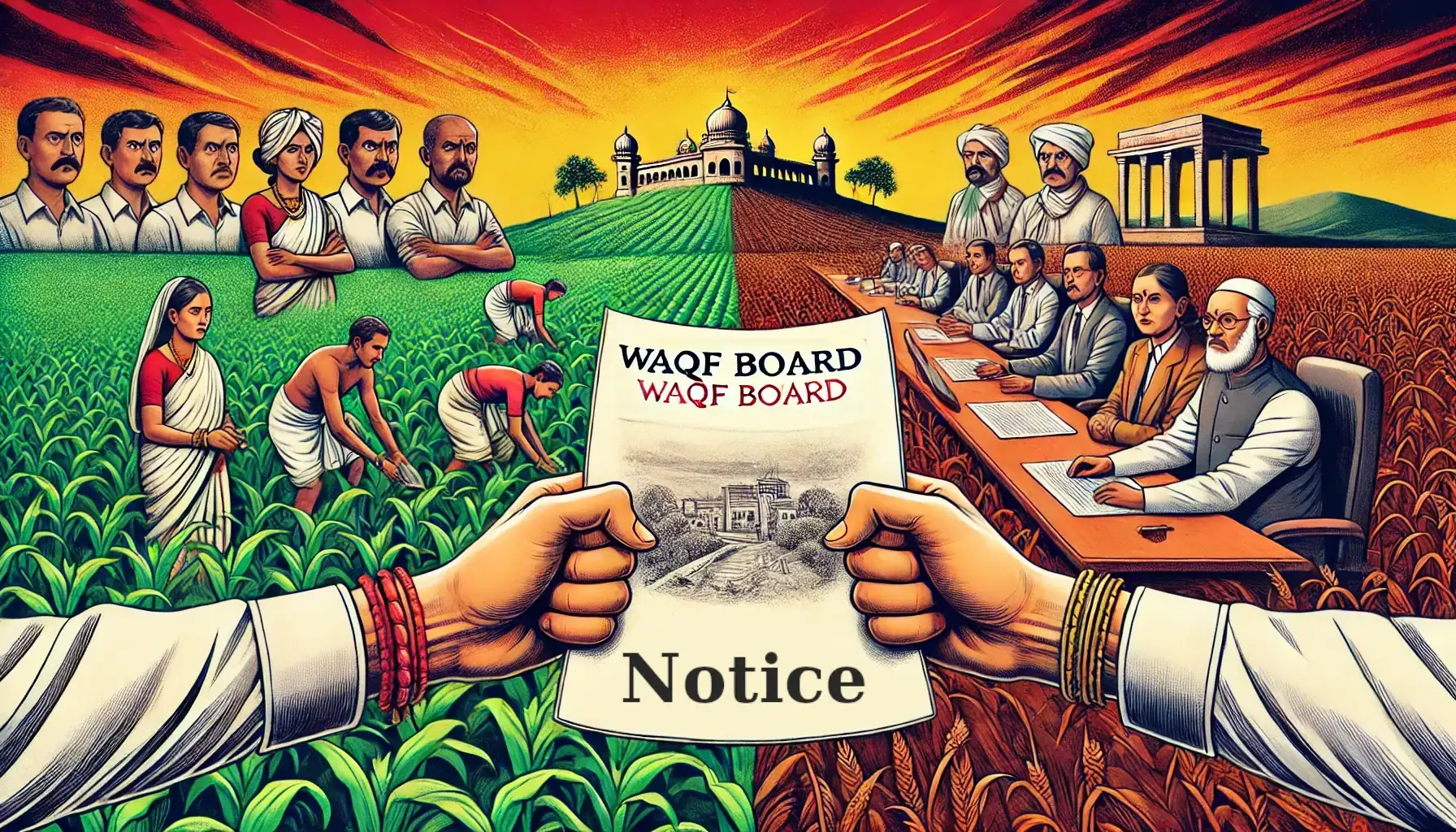
Recently, farmers in Karnataka’s districts like Vijayapura reported receiving notices claiming their ancestral lands as Waqf properties, leading to fears of eviction. The situation escalated as the opposition Bharatiya Janata Party (BJP) accused the Congress-led state government of “land jihad,” alleging that the Waqf Board was being used to unjustly seize land from farmers.
In response, Chief Minister Siddaramaiah ordered the withdrawal of these notices, asserting that no farmer would be evicted from their land. This directive followed a high-level meeting with officials from various departments, emphasising the government’s commitment to protecting farmers’ rights. However, the BJP has continued to protest, demanding accountability and the resignation of Waqf Minister Zameer Ahmed Khan, while also calling for a review of the Waqf Act.
The Waqf Board, established under the Waqf Act of 1995, is responsible for managing properties dedicated to religious and charitable purposes within the Muslim community. The Waqf Act itself has been under contention recently with the Union Government having constituted a Joint Parliamentary committee to review the Waqf (Amendment) Bill, 2024. As tensions rise, the controversy has not only highlighted the complexities of land ownership but has also become a focal point for political manoeuvring ahead of the upcoming assembly elections, with both parties leveraging the issue to rally support from their respective bases.
Jargon
- Waqf: A legal term referring to properties dedicated for religious or charitable purposes in Islam, managed by a board to ensure they serve the intended community benefits.
- Waqf Board: A statutory body established under the Waqf Act of 1995 in India, responsible for managing and regulating waqf properties, ensuring their proper use for community welfare.
- Land Jihad: A controversial term used by some political groups to describe alleged attempts to seize land from farmers under the guise of waqf claims, often invoking communal sentiments.
- Waqf Minister: The government official responsible for overseeing the Waqf Board and its activities, ensuring that waqf properties are managed according to the law.
Viewpoints 💭
- The Congress-led Karnataka government refutes BJP’s accusations of ‘land jihad’, emphasising that the notices issued were based on historical errors and are being retracted to protect farmers’ rights.
- Chief Minister Siddaramaiah and other Congress leaders argue that the BJP is politicising the Waqf land issue for electoral gains, pointing out that similar notices were issued during the BJP’s tenure.
- The Congress emphasises the importance of maintaining social harmony and accuses the BJP of using the Waqf issue to create communal tensions and disrupt peace in Karnataka.
- Congress leaders, including Zameer Ahmed Khan, defend the government’s actions as corrective measures to prevent unjust land claims and assure farmers that their lands will not be seized.
- The Congress government highlights its commitment to rectifying administrative errors in land records and accuses the BJP of spreading misinformation to incite fear among farmers.
- The left emphasises the historical errors in land records as the root of the Waqf issue, advocating for corrective measures to protect farmers, while the right accuses the Congress of using these errors to facilitate ‘land jihad’.
- While the left views the withdrawal of Waqf notices as a necessary step to address past administrative mistakes, the right sees it as a politically motivated act of appeasement targeting minority votes.
- The left argues that the BJP is exploiting the Waqf issue to create communal tensions and gain electoral advantage, whereas the right insists that their protests are a defence of farmers’ rights against unjust land claims.
- The left focuses on maintaining social harmony and accuses the BJP of spreading misinformation, while the right demands accountability and transparency, calling for investigations into alleged Waqf land encroachments.
- Congress leaders emphasise the government’s commitment to correcting land record errors and protecting farmers, whereas BJP leaders highlight the need for legal reform and the repeal of the Waqf Act to prevent misuse.
- The BJP accuses the Congress government of facilitating ‘land jihad’ by allowing the Waqf Board to claim farmers’ lands, demanding the resignation of Waqf Minister Zameer Ahmed Khan.
- BJP leaders argue that the Waqf Act is being misused to unjustly seize land, calling for its repeal and a comprehensive investigation into the alleged encroachments.
- The BJP criticises the Congress for retracting Waqf notices as a superficial measure, accusing them of appeasement politics to secure minority votes and ignoring the concerns of Hindu farmers.
- BJP leaders, including Tejasvi Surya, demand a CBI investigation into the Waqf Board’s actions, alleging unauthorised changes to land records and government collusion in these activities.
Prominent Voices 📣
- Siddaramaiah (Chief Minister of Karnataka): Criticised the BJP for politicising the Waqf land issue and assured the withdrawal of eviction notices to protect farmers, emphasising the government’s commitment to addressing the issue sensitively.
1
2
- D K Shivakumar (Deputy Chief Minister of Karnataka): Highlighted the BJP’s role in initiating land record changes under the Waqf Act and assured protective measures for farmers, criticising past BJP actions.
- B Z Zameer Ahmed Khan (Waqf Minister): Accused the BJP of conspiracy and assured farmers that their lands would not be taken, emphasising the legal basis for Waqf claims and criticising the BJP for politicising the issue.
5
- M B Patil (Industries Minister overseeing Vijayapura district): Clarified the confusion due to an error in a gazette notification and assured farmers of legal reviews to protect their land.
- G Parameshwara (Home Minister of Karnataka): Supported the withdrawal of eviction notices and emphasised the precedence of revenue records over Waqf claims, criticising the BJP’s prolongation of the issue.
7
- Krishna Byre Gowda (Revenue Minister): Clarified procedural lapses in land claims and assured no eviction notices for farmers, emphasising the government’s commitment to rectifying errors.
- Mohammad Mohsin (Former Deputy Commissioner and Waqf Board Chairman): Justified the Waqf Board’s claims based on documentary evidence and government notifications, emphasising the legal basis for the actions.
10
 11
11 - Nagaraj Yadav (Karnataka Congress leader): Defended the CM’s decision, accusing the BJP of politicising the issue and affirming Congress’s commitment to societal unity.
- Basavaraj Bommai (Former Chief Minister of Karnataka and BJP leader): Urged action on Waqf property encroachments based on the Anwar Manippady report and criticised the Congress for political inconsistency.
- C.N. Ashwath Narayan (Former Deputy Chief Minister and BJP MLA): Announced BJP’s plans for statewide protests against the misuse of the Waqf Act for minority appeasement.
13
- R Ashok (BJP Leader and Leader of the Opposition): Expressed concerns over the alleged eviction of farmers for Waqf land allocation and described the notices as ‘land jihad’.
16
- Tejasvi Surya (BJP MP): Accused the Waqf Board of land encroachment with state government support and emphasised the need for a committee visit to assess the situation.
- Pralhad Joshi (Union Minister and BJP leader): Highlighted the negative impact of the Waqf Act on poor Muslims and criticised actions in Vijayapura, calling for suspension of responsible tahsildars.
19
20
- Shehzad Poonawalla (BJP National Spokesperson): Criticised the Karnataka government for its inconsistent stance on the Waqf land issue, accusing it of vote bank politics.
- Chalavadi Narayanaswamy (Karnataka Legislative Council LoP): Criticised the withdrawal of notices as an eyewash to win elections and called for the withdrawal of the 1974 gazette.
- Basanagouda Patil Yatnal (BJP Karnataka leader and Bijapur MLA): Criticised the Waqf Board’s actions as tyrannical and called for nationalisation of Waqf properties to ensure equal rights.
- Anwar Manippady (Former Minority Commission Chairperson): Documented illegal encroachments on Waqf properties in a report, naming senior Congress leaders.
22
- Amit Malviya (BJP IT cell head): Criticised the Congress government for facilitating a ‘land grab’ by the Waqf Board for political gain.
23
Sources 📚